background  background

KTH (Department of Strategic Sustainability)
YEAR: 2021-2022
ROLE: Research Engineer


Energy — User-centred design for flexible energy use

Energy Efficient
Everyday Life
This project explored how user-centred design can support households in navigating new energy pricing models, particularly power-based tariffs and real-time electricity feedback. The work was carried out as part of a research collaboration with Uppsala University, KTH, Ellevio, Bright Energy and Ngenic - funded by the Swedish Energy Agency.

As electricity systems become increasingly strained by electrification, flexibility is often treated as a technical issue. This project reframed it as a design and perception problem, asking how people understand energy, power, cost, and climate impact in daily life - and what kinds of feedback actually support meaningful suistanable action.

Using user-centred and qualitative methods, conducting interviews, workshops and usability tests with both electricity consumers and prosumers (households with solar panels). Based on these insights, we developed and tested multiple design concepts for real-time energy feedback, including digital interfaces and ambient, physical visualisations.

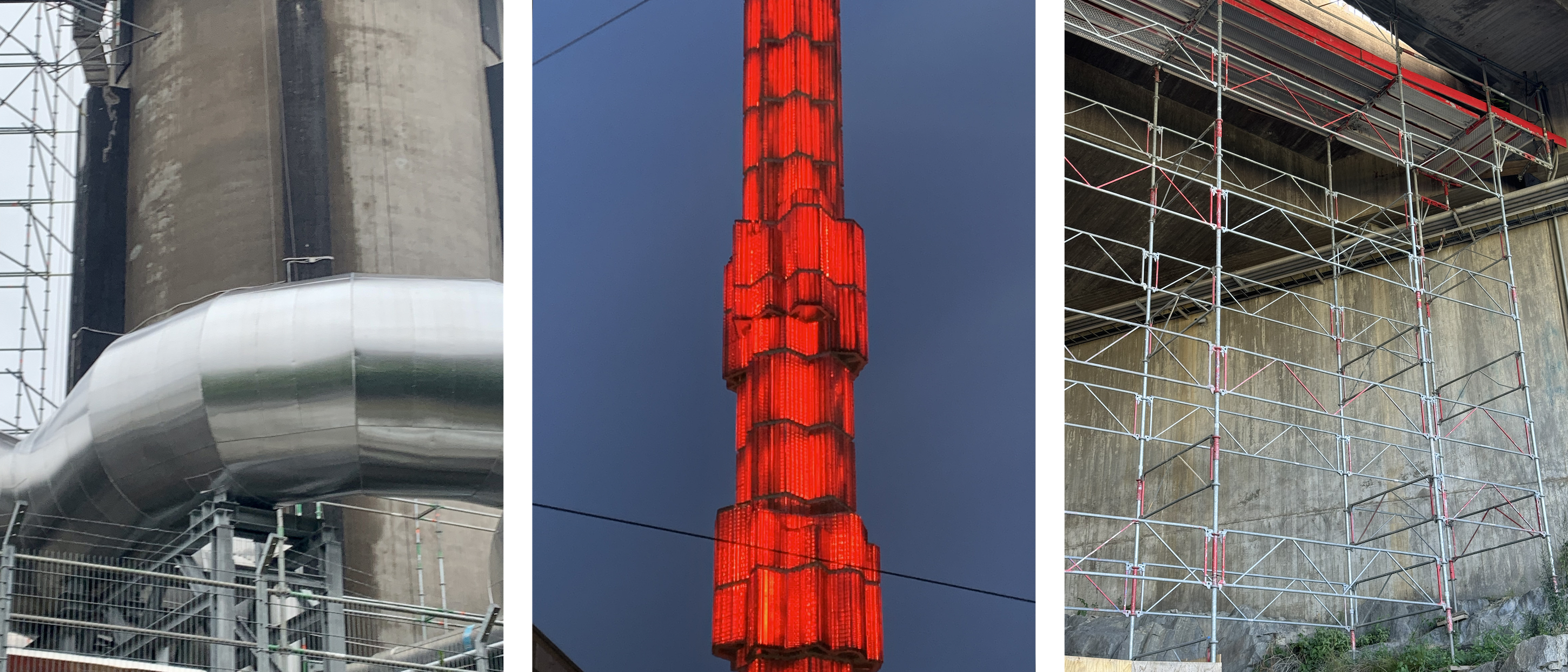
Urban energy infrastructure in Stockholm
Steel ducting Hjorthagen, Stockholm
Public light installation Sergels Torg, Stockholm
Temporary scaffolding Årstalänken, Stockholm
(1) Steel ducting — Hjorthagen, Stockholm
(2) Public light installation — Sergels Torg, Stockholm

DESIGN PROCESS
My contribution focused on user research, facilitating workshops, concept development and synthesis of user insights - helping translate energy systems into humane solutions that respect everyday life constraints rather than fighting them.


RESEARCH FINDINGS

▪ Households are primarily motivated by economic effects, while climate impact is often perceived as a positive side effect.

▪ Broken down and real-time feedback (showing how specific activities and appliances affect usage) has the strongest potential to influence behaviour.

▪ The distinction between energy (kWh) and power (kW) is poorly understood and requires careful design to avoid misinterpretation.

▪ Comparisons work best when based on a household’s own historical data, rather than comparisons with other households.

▪ Feedback must be personal, coordinated and immediately actionable to be effective.


The project contributes practical design insights to the transition toward a more flexible and resilient energy system, shifting the focus from infrastructure to how people actually experience and engage with energy.


[Prototype]
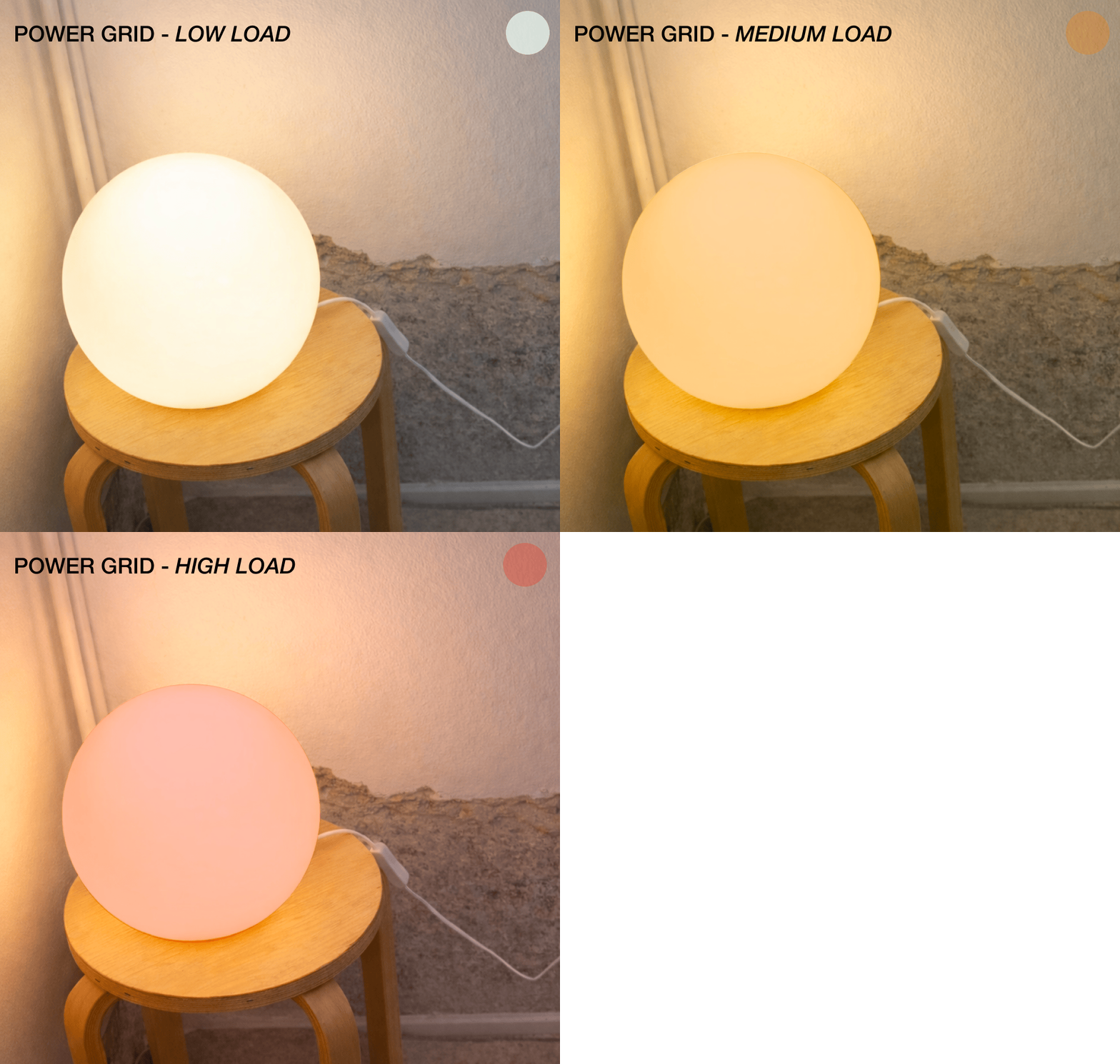
Household Lamp that reflects the load of the power grid by shift in intensity & color


Design Process

[Prototype]
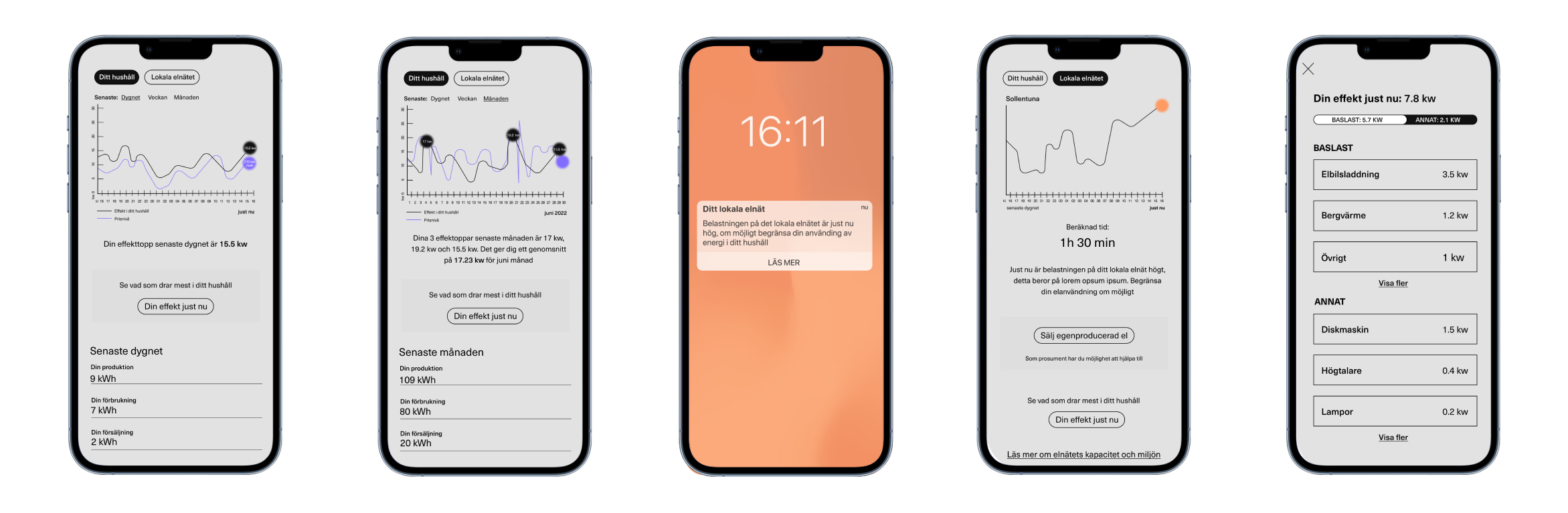
PART OF LO-FI APP PROTOTYPE for Consumers
Design Process