YEAR: 2020
ORG: Dreams
ROLE: Facilitator
Dreams mission is to make saving money a joyful and achievable part of everyday life
To support Dreams ambition of reaching a broader audience, we were brought in to explore new ways of enhancing product expansion and organic user growth. I took a role in planning and facilitating a design sprint together with my team.
→ Expert Insights
We began by aligning on context. Through 'expert interviews' with key people in the Dreams team, we gathered insights, pain points, and opportunities. These conversations lead to “Can we…?"-questions to set a direction for the design sprint. This led to a defined long-term goal and sprint questions to guide the rest of the process.
→ Sketching Ideas
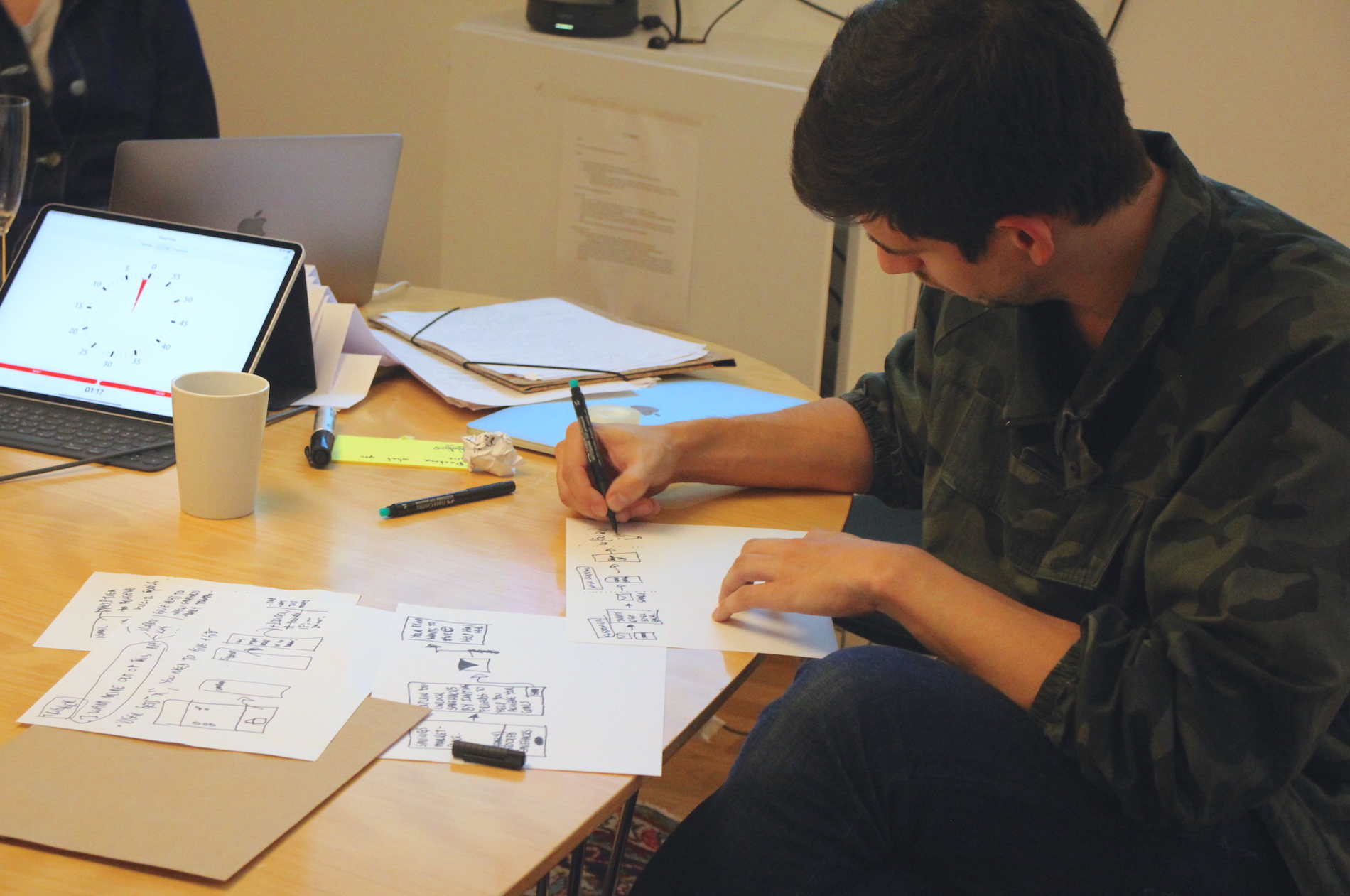
The afternoon shifted into idea generation. I facilitated sketching sessions, using exercises like note-taking, Crazy 8s, and rapid ideation. For some participants, this was a new pace of working - part of my role became creating safety while keeping the pace. The day ended with each team member having one presentable concept
→ Concept Evaluation and Selection
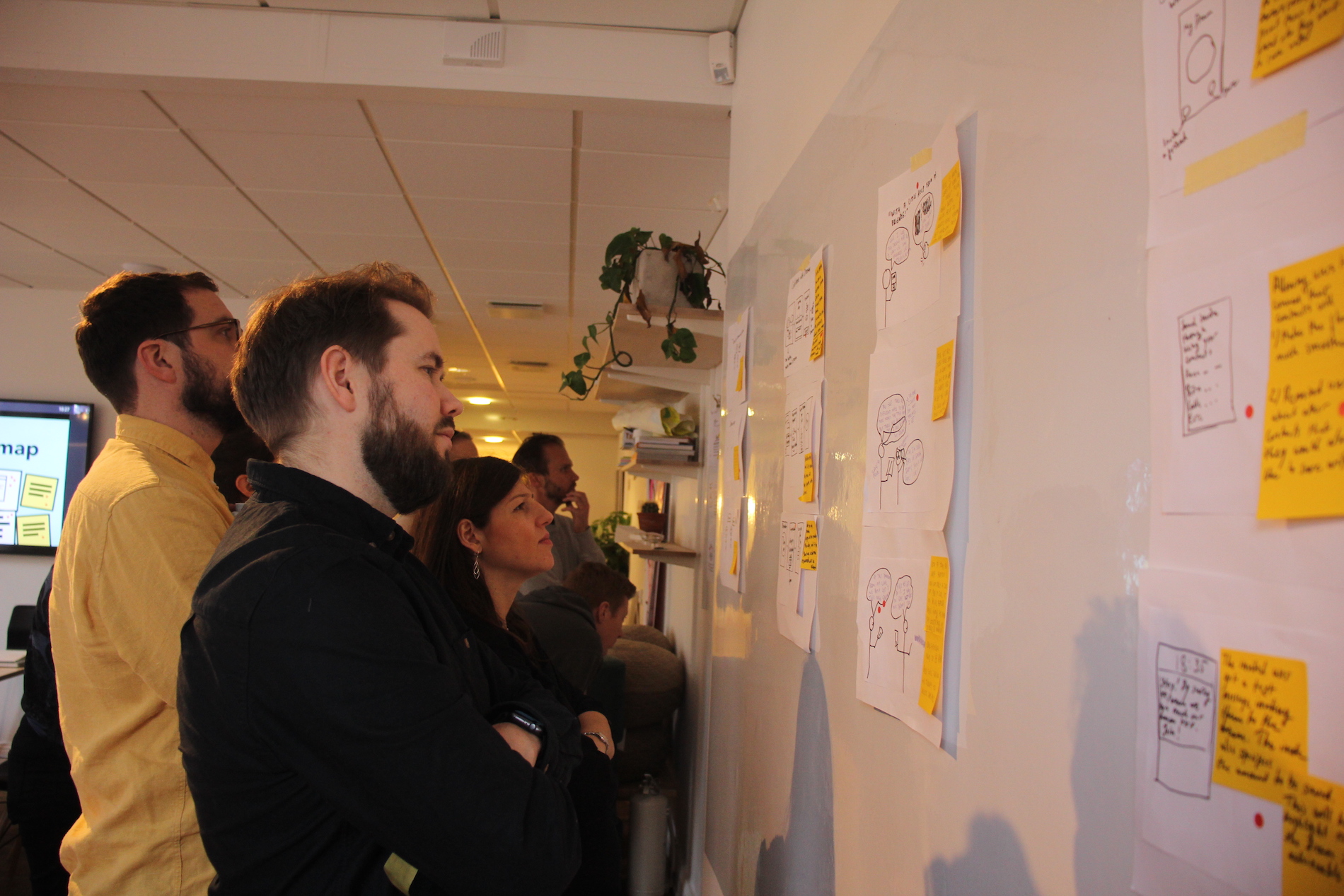
All concepts were anonymized and displayed on the wall for team critique. Using dot-voting, two clear front-runners emerged: one centered on a monetary reward, and another built on playful gamification.
From there, we moved into collaborative storyboarding. The two chosen concepts were mapped out into a detailed flow, laying the foundation for prototyping. Managing two parallel concepts within the same sprint introduced complexity, but allowed us to compare them side-by-side.
→ Storyboarding & User Flows
The focus shifted to detailed storyboarding of the chosen concepts and crafting a step-by-step user flow. Ensuring detailed storyboards worked as a base for prototype creation, although managing two concepts simultaneously was challenging.
→ Prototyping
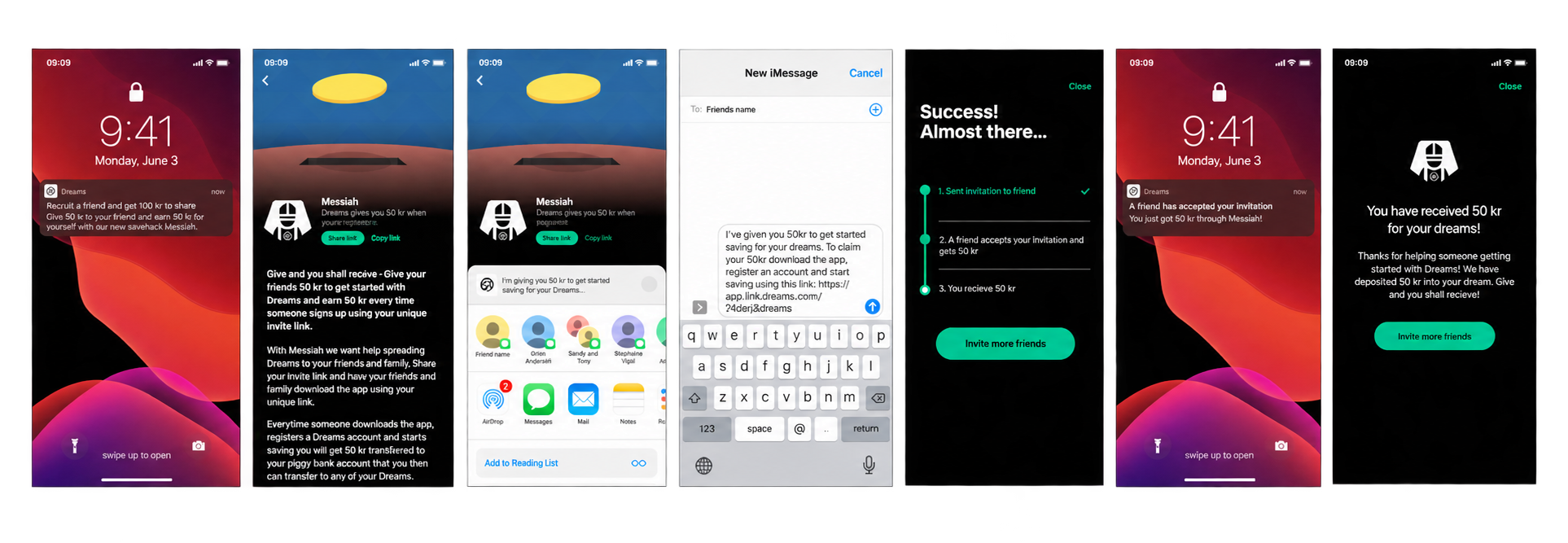
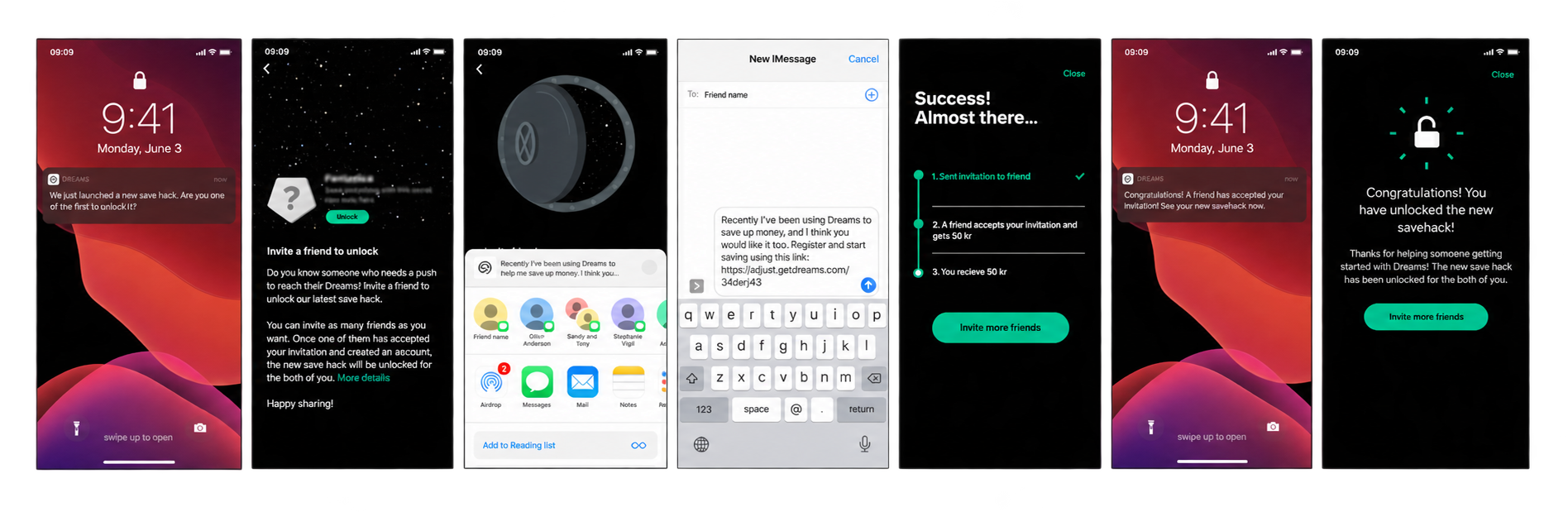
Our design team used Figma to develop prototypes mirroring the storyboard sketches. The challenge at this stage was making rapid UI decisions. Dreams design system helped in making this more effective. In the meanwhile, we reached out to recruit participants for testing the prototypes the next day.
→ Testing, testing
The protype was tested by remote usability testing, interacting with prototypes while sharing their screens. These insights were the base for the further development of the prototype.
USER INSIGHTS
→ Prototype 1 (monetary) was perceived as the most intuitive and motivating. Users responded positively to its clarity, immediacy, and transparent value exchange.
→ Prototype 2 (gamification) sparked initial curiosity through its “unlock to reveal” mechanic, but lacked the urgency and clarity needed to drive completion or referrals.
→ The “unlock to reveal” interaction was appreciated and showed potential beyond referrals, for example as a way to access educational content such as savings tips or classes.
→ Referrals increased when users could see that friends were planning concrete goals, such as trips or purchases, reinforcing relevance and social proof.
→ Users strongly preferred sharing links within existing group chats rather than sending pre-filled messages, as this felt more natural and socially embedded.
→ Custom, self-written messages resonated more than generic copy. Users wanted invitations to feel personal and authentic, reflecting their own voice.
→ Seeing incoming funds in real time acted as a powerful motivator for continued sharing and engagement.
→ In-app communication was perceived as more reliable and trustworthy than push notifications.
• Dreams implemented the referral program in the Norwegian market
• Our team was invited back to Dreams Office to present the sprint method and findings company-wide
• Introducing new methods like sprint exercises, impacting internal way of working internally